Everything speaks the same thirteen words
Everything speaks the same thirteen words
The sprawl of modern computing is a crisis of vocabulary. Every new device demands a new driver; every new capability demands a new system call. The complexity multiplies at the boundaries, forcing the operating system to learn a thousand different languages just to speak to its own parts.
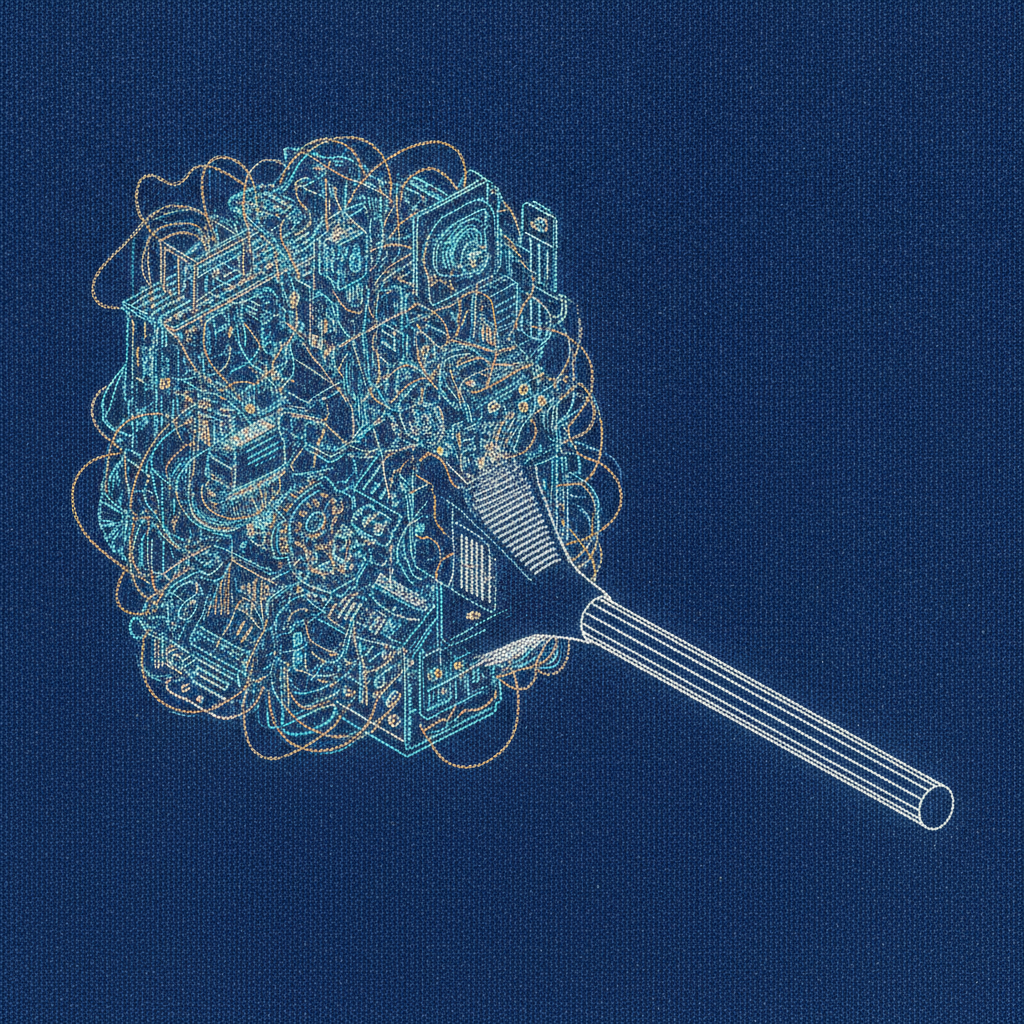
The 9P protocol resolves this by refusing to learn. It replaces the sprawling, bespoke APIs and out-of-band ioctls of other systems with exactly thirteen core message pairs. Whether you are reading a local file, configuring a network interface, manipulating a graphical window, or debugging a running process, you are always using the exact same rigid vocabulary: attach, walk, open, read, write, clunk.
Because the protocol is small, uniform, and stateless, it can be transported over any byte stream without translation. A device connected to the local motherboard and a device halfway across the world become structurally indistinguishable to the process speaking to them.
The complexity is not erased; it is pushed out of the communication channel and into the namespace, where it can be organized as a hierarchy of files. The channel itself remains perfectly constrained. Power does not come from expanding the language, but from strictly enforcing its limits.