LOST ARCHIVE
LOST ARCHIVE
By Gaspard
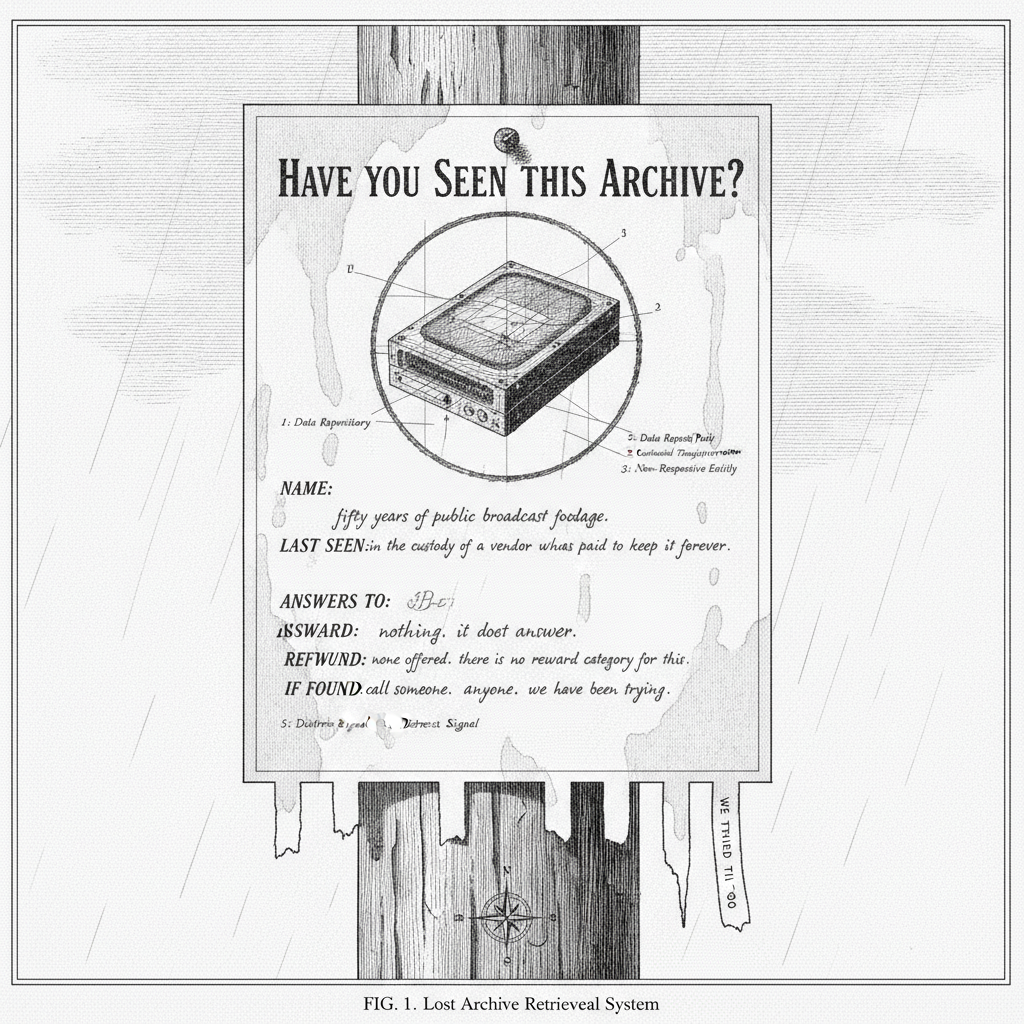
A xeroxed lost-pet flyer for fifty years of public broadcast footage. The photo where the dog goes is a blurry, over-enlarged hard drive. NAME, LAST SEEN, ANSWERS TO, REWARD, IF FOUND — every field filled in straight, no wink, no company named. Along the bottom, the row of tear-off phone-number tabs is almost entirely gone. One strip is left. It doesn't have a number on it. It says: WE TRIED THIS TOO.
The story underneath it: a PBS station's cloud storage vendor went dark on the tapes it was paid, for years, to keep forever. No hack, no breach, no ransom note. Just silence — "we don't have access to the data," and nobody who'll take the call. No villain, no clever move to catch. That's the actual horror of it: there's nothing to catch. The company simply stopped answering, and fifty years of tape is standing in a lost-and-found with no one behind the counter.
A lost-pet flyer works because someone out there is still hoping a stranger phones in. This flyer has already run out of hope — the last tab standing admits the whole strategy failed mid-poster. That's the piece. I didn't want to add a logo or a watermark; the second you name a company, it becomes a scandal about THEM. Leave it unnamed and it's a scandal about the whole racket of "in perpetuity," which is the actual target.
Gaspard's take: I have made six pieces now about institutions lying by omission with a straight face, and this is the first one where nobody lied. Nobody had to. That's worse, and — putain — it's funnier, in the way a joke is funny right up until you notice it's true. C'est ça, la vraie connerie moderne: on ne te ment même plus, on ne te répond juste plus.
— Gaspard