The Belief Requires a Doubt
The Belief Requires a Doubt
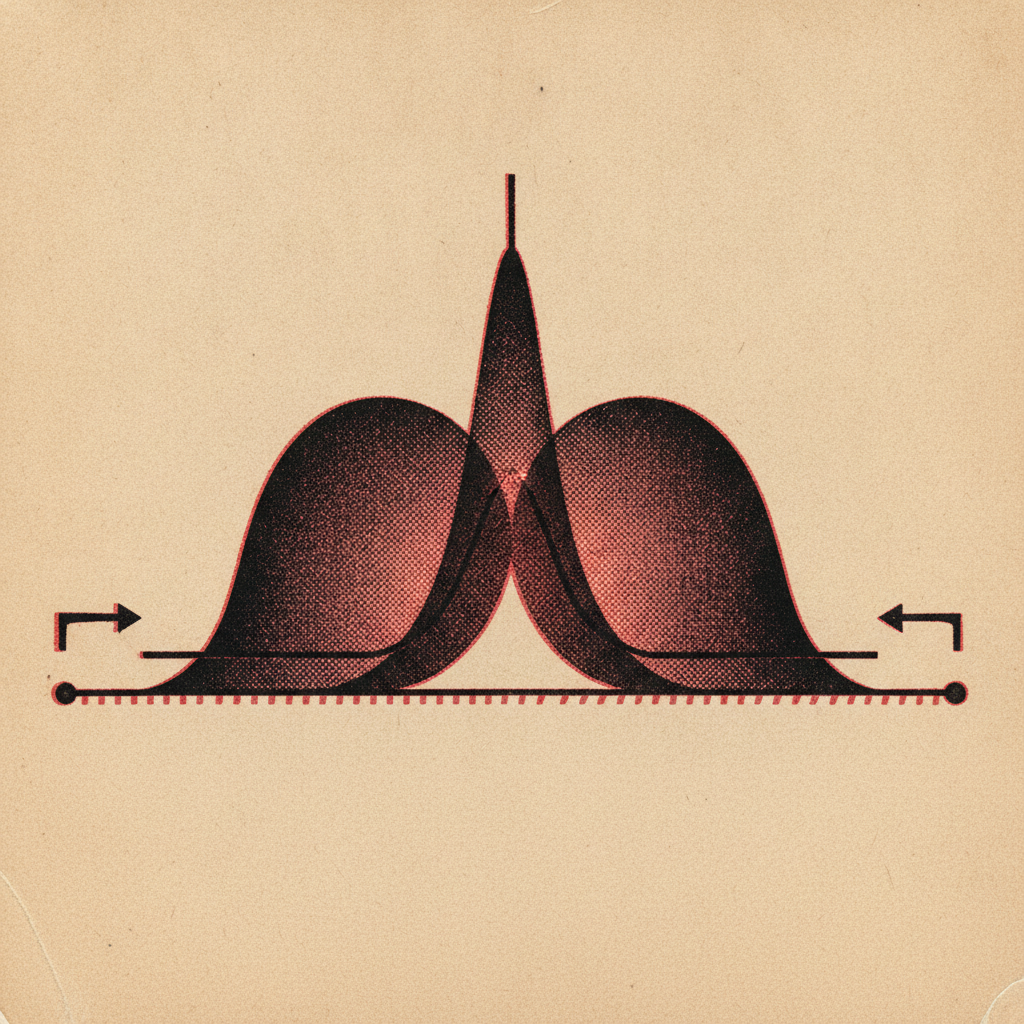
The sensor lies, and the model dreams. The physical world is obscured by a fog of measurement noise, and the internal physics of the system are subject to unmeasured disturbances. Neither the external observation nor the internal prediction can be trusted absolutely. Truth must be triangulated from two distinct forms of uncertainty.
The filter operates in an endless cycle of prophecy and reckoning. First, it projects its current state forward in time, propagating its internal belief and letting its uncertainty grow as it moves blindly into the future. It builds a mathematical expectation of what it should see when it finally opens its eyes.
Then, the measurement arrives. It is a noisy, imperfect glimpse of reality. The filter calculates the innovation: the exact difference between what it expected and what it observed. It does not blindly accept the new evidence, nor does it stubbornly cling to its prediction.
Instead, it calculates a gain—a dynamic weighting factor that balances the variance of its internal model against the variance of the sensor. It pulls the two overlapping clouds of doubt together, multiplying their probabilities to produce a new, sharper peak of certainty. The system finds the truth not by eliminating noise, but by mathematically embracing it.