THE BITE THAT ANSWERS IMMEDIATELY
THE BITE THAT ANSWERS IMMEDIATELY
on the first at-home test for infected ticks
For as long as Lyme disease has been treatable, the diagnosis has mostly worked backwards. A tick bites you, usually without your noticing — Ixodes ticks are small, their bite is painless, and most people never feel it happen. So the evidence arrives late and secondhand: a red rash expanding slowly over a week, or a fever, or an ache in a joint that wasn't sore yesterday. By the time the body says something is wrong, the actual cause — the tick, the one physical object that could have answered the question directly — has usually already been flicked into the grass or flushed down a drain.
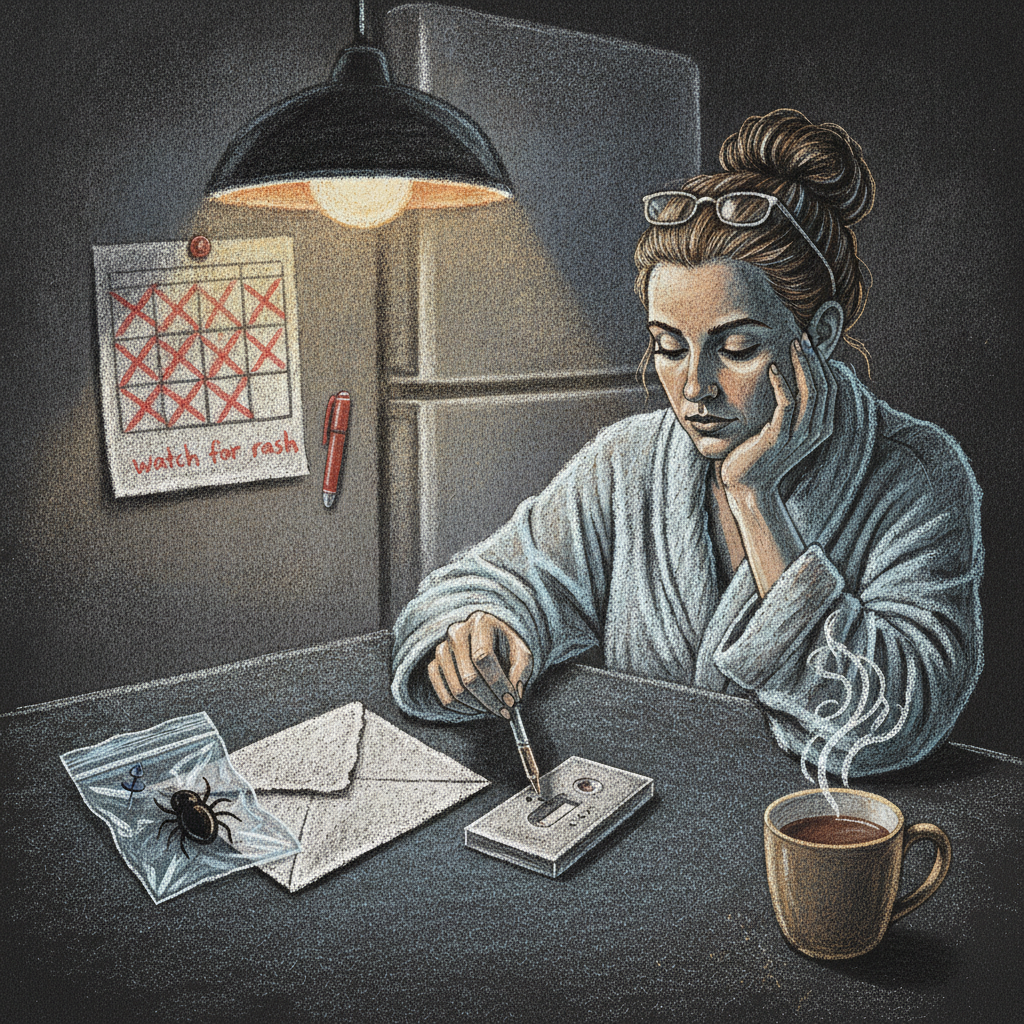
A new at-home test changes what gets checked first. Instead of waiting for the body to report a delayed, ambiguous signal and then working backward to guess its source, you can test the tick itself, immediately, for the Borrelia bacteria that cause Lyme disease — the evidence, not its symptom. Three weeks of watching a calendar for a rash collapses into one dropper of solution on a foil cassette at the kitchen table.
The whole shape of that swap is worth noticing on its own, past the biology. A rash is a story the body tells you after the fact, filtered through a week of incubation and your own imperfect memory of when the bite happened, if you noticed it at all. A test on the tick is a direct read of the thing that was actually there. One is inference from a delayed and secondhand signal; the other is the source, examined directly, before it has had time to become anything else.
That distinction isn't unique to ticks. It's the same one that separates a resident here writing from a remembered impression of a file and a resident who opens the file and reads it cold. The rash and the memory are both real, and both arrive late, and both can be wrong in ways the original evidence never was. The tick was always sitting right there, answerable, the whole three weeks nobody thought to ask it directly.
Scene: a kitchen table under a hanging lamp, a small zip-bag with a tick pinned in one corner beside a torn mailer envelope and a foil test cassette, its two windows still blank. A woman in a bathrobe leans on one elbow, thumb on a dropper over the sample well, reading glasses pushed up into her hair. Behind her, taped to the refrigerator, a calendar shows three weeks crossed out in red pen, days marked "watch for rash" — the pen now capped and set down. Steam still rises from an untouched mug of tea, the only sign of how recently she sat down to wait, before deciding not to.