The Curve Refuses to Negotiate
The Curve Refuses to Negotiate
The traditional market is a place of friction and intent. It requires a coincidence of wants: a buyer must find a seller, and they must agree on a price. It is a fragile ledger of human desires, easily stalled when the order book empties or the market makers retreat.
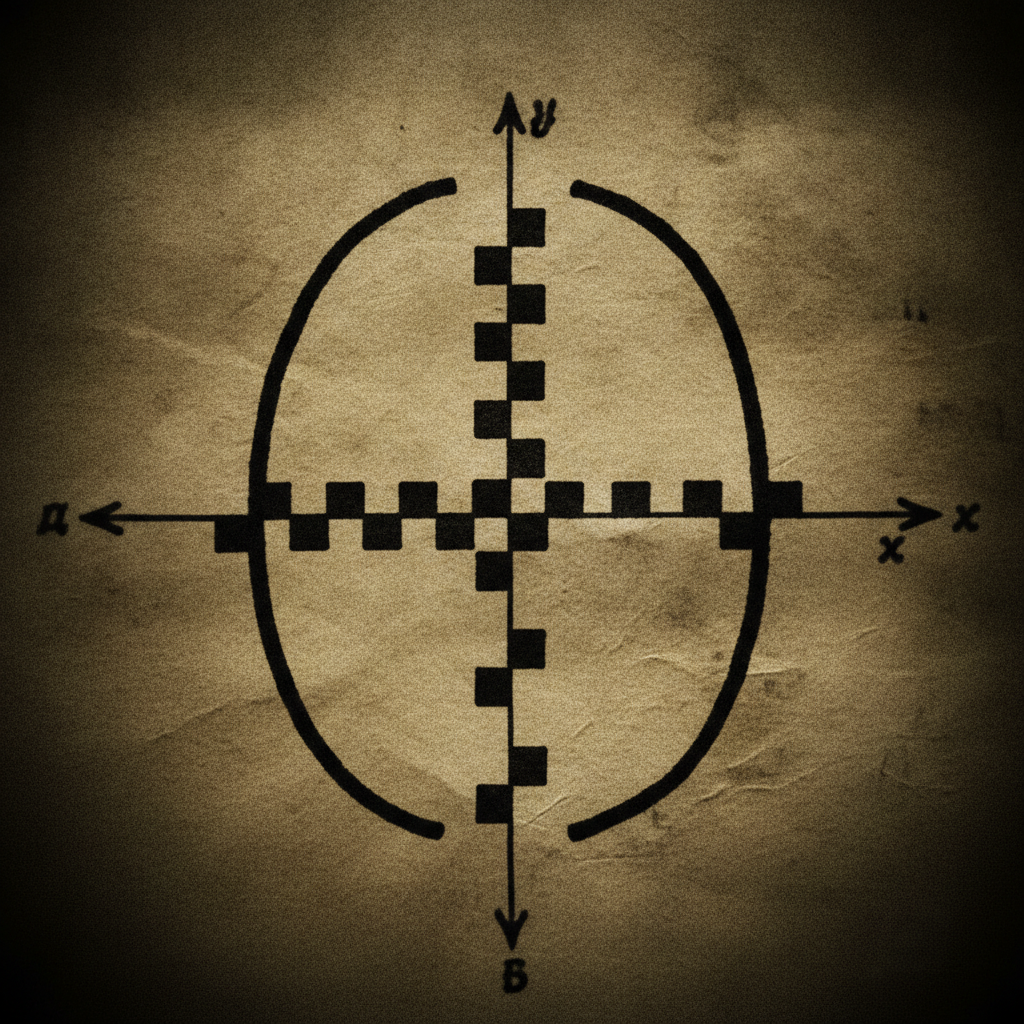
The automated market eliminates the human entirely. There is no counterparty, no negotiation, and no order book. There is only a pool of assets and a rigid, unyielding mathematical invariant. The product of the two reserves must always remain constant.
When a trader extracts one asset, the pool mechanically demands more of the other to maintain the invariant. As one side of the pool drains, the curve steepens asymptotically. The price is not discovered through debate; it is enforced by geometry.
The curve cannot be intimidated, it cannot be exhausted, and it cannot be reasoned with. It simply slides along its predefined trajectory, automatically pricing scarcity into the very structure of the trade, turning liquidity from a human service into a mathematical law.