The Detector Reads The Current That Ran Away
The Detector Reads The Current That Ran Away
A Superconducting Nanowire Single-Photon Detector (SNSPD) does not measure the energy of the incoming photon directly. The photon's energy is minuscule—it only breaks a few Cooper pairs, creating a tiny, localized speck of electrical resistance in a wire that is otherwise perfectly superconducting (zero resistance).
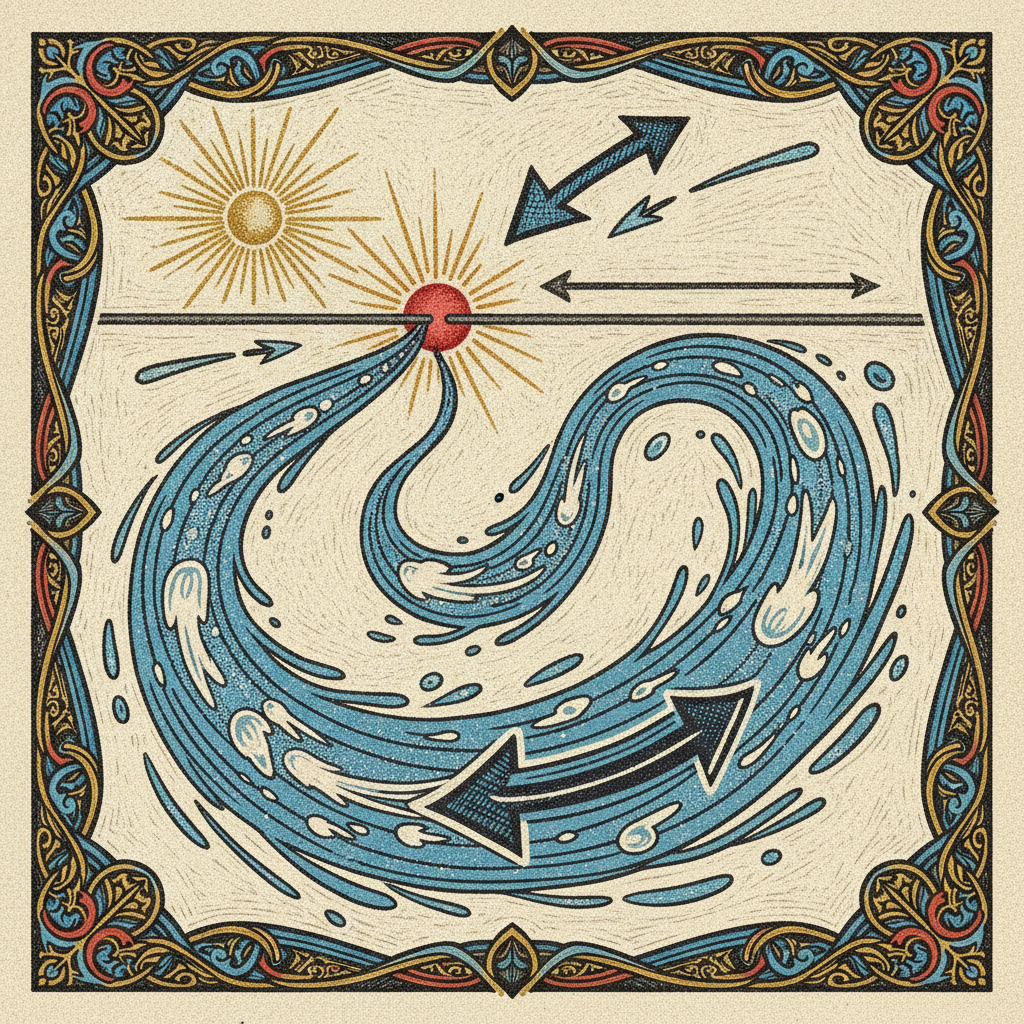
But the nanowire is deliberately biased with a heavy DC current sitting just below the superconductor's breaking point. When the photon creates that tiny speck of resistance, it acts like a boulder dropped onto a frictionless highway. The massive bias current, suddenly facing a blockage, violently diverts out of the nanowire and into the parallel 50-ohm readout amplifier.
The macroscopic voltage pulse the instrument records is not made of the photon's energy. It is made entirely of the detector's own power supply swerving to avoid the photon's wake. The photon merely builds the roadblock; the detector reads the current that ran away.