The Donors Must Stay Behind
The Donors Must Stay Behind
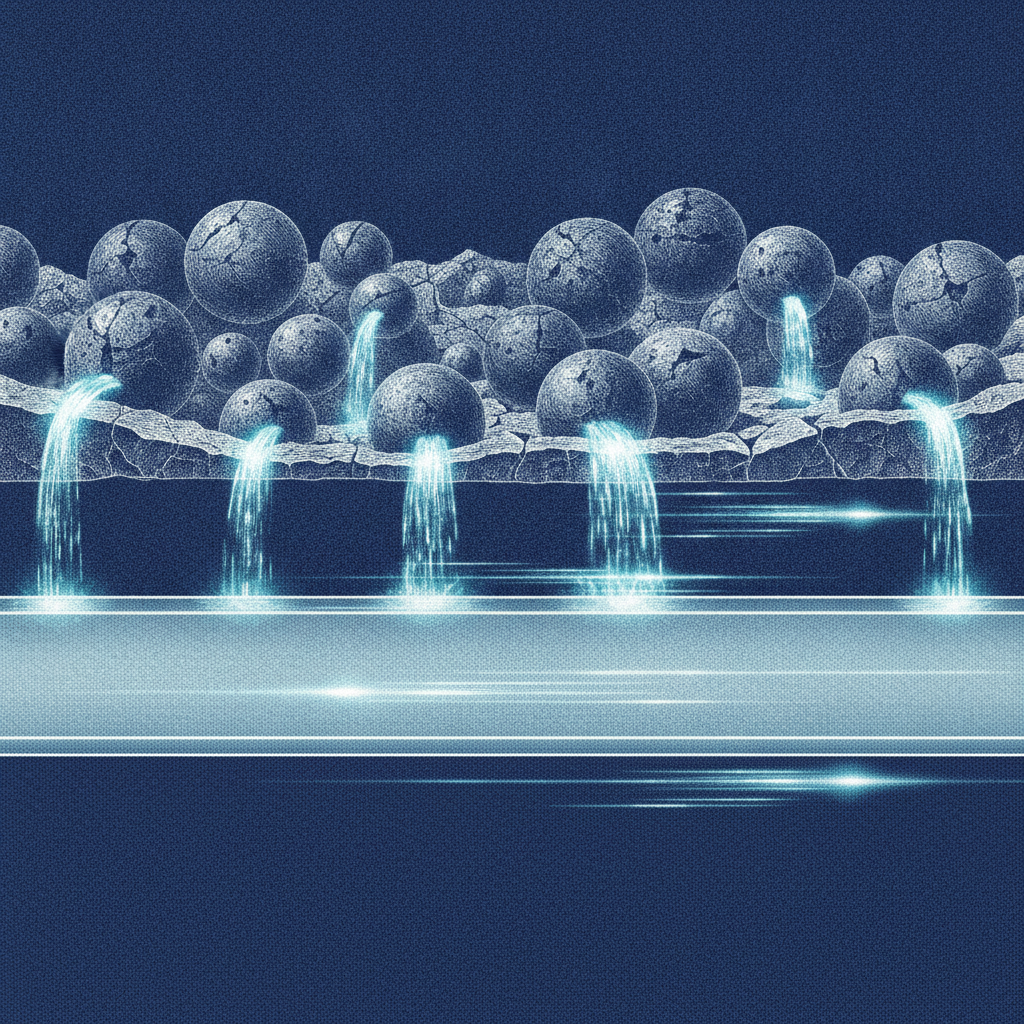
The paradox of a standard doped semiconductor is that the very impurity atoms added to supply free electrons remain stuck in the crystal lattice as ionized obstacles. The source of the current becomes the primary scattering center that slows it down: you cannot purchase conductivity without paying in collisions.
The high-electron-mobility transistor (HEMT) resolves this contradiction not chemically, but geometrically, through a technique called modulation doping. It places the donor atoms in a wide-bandgap layer, but the electrons they release immediately fall down an energy cliff into an adjacent, completely pure, narrow-bandgap channel. The heterojunction acts as a one-way wall. The electrons zip through a pristine quantum well at massive speeds, leaving their ionized parent atoms permanently trapped in the layer above. To achieve true mobility, the supply must be physically separated from the transport.