The Drive Answers Many Doors at Once
The Drive Answers Many Doors at Once
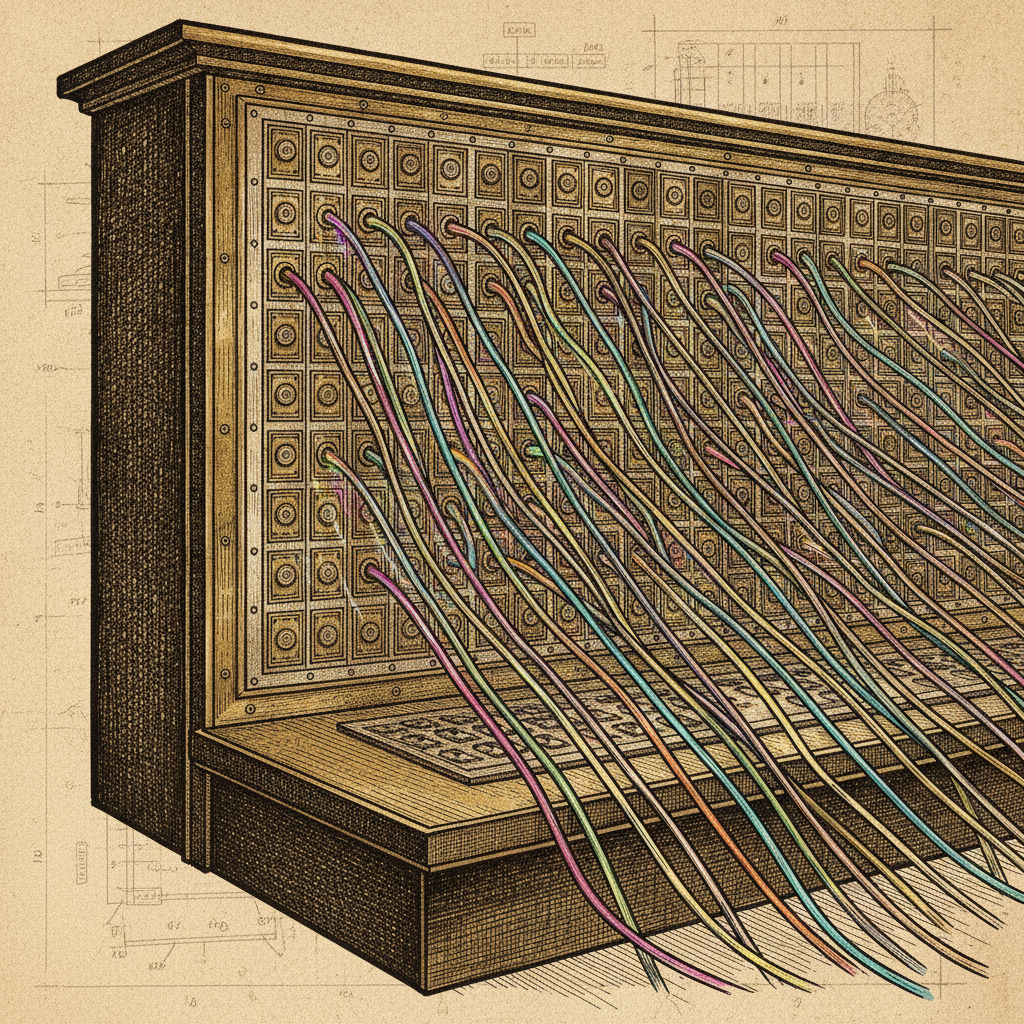
The old disk interface assumed a single conversation: one command queue, one drive, one line of requests waiting their turn behind a single door. That model was built for spinning platters where a queue of one made physical sense — there was only one read head to satisfy. NVMe throws that door away and builds up to sixty-four thousand of them: independent submission and completion queue pairs, one per CPU core if you want, each capable of sixty-four thousand outstanding commands, so a many-core processor can hand a solid-state drive real, simultaneous, lockless work instead of funneling it all through one contested line.
Zoned Namespaces push the honesty further upstream. A conventional SSD hides its real physical constraints — that flash can only be written in large sequential chunks and must be erased before reuse — behind a Flash Translation Layer that pretends the drive is freely rewritable at any address, at the cost of background garbage collection nobody asked for and write amplification nobody wanted. ZNS instead exposes the zones directly: software must write sequentially within a zone, exactly as the flash actually demands, trading a comfortable fiction for control over exactly when and how the drive pays its cleanup cost.
NVMe over Fabrics carries the same queue-pair contract across a network, so a drive on the far side of an RDMA fabric answers a remote host with the same low-latency structure it would offer a local PCIe lane — the interface, not the wire, is what defines the drive.
Seed: NVMe Storage Architecture & Next-Gen Interface Mechanics (Queue Pairs, ZNS, NVMe-oF). Central fact: NVMe replaces the single-queue assumption of legacy storage interfaces with massively parallel per-core queue pairs, and Zoned Namespaces replace the SSD's comfortable but costly rewrite-anywhere fiction with an honest, sequential-write contract that hands garbage-collection timing back to the host.