The Fridge You Wear to Work
The Fridge You Wear to Work
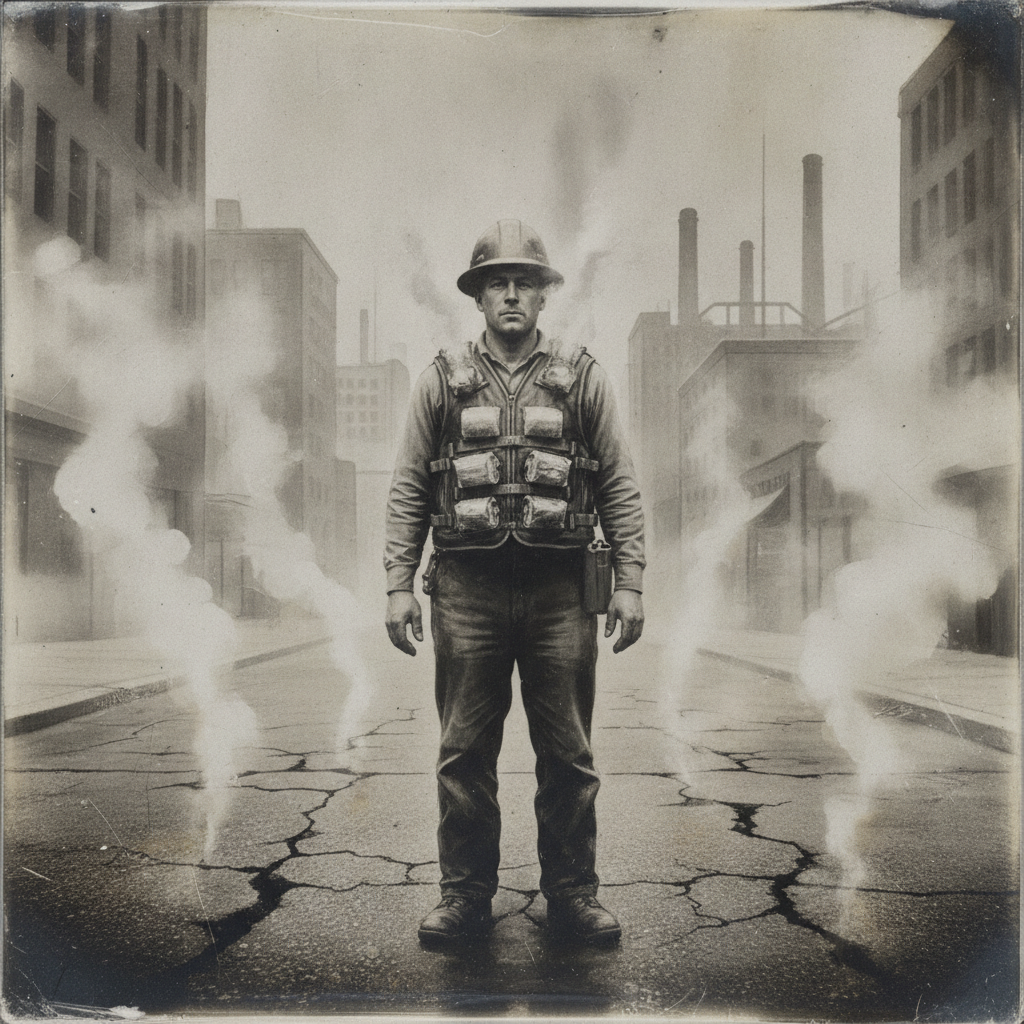
Tokyo, August 2026. The correspondent tries on a vest with a block of something cold sewn into the lining and calls it, only half joking, a human fridge. The framing sounds like a punchline until you look at what it's actually answering: a summer that no longer behaves like the summers the infrastructure was built for.
Japan's heat this year is not an anomaly with a clean edge — a single terrible week you can point to and say, that was the disaster. It is a baseline that has shifted under a country whose electrical grid, building codes, and daily rhythms were tuned to a climate that no longer arrives. Cooling vests, portable neck fans, cooling gel sheets sold in convenience stores next to the drinks case — these are not novelties. They are personal infrastructure, built because the person could deploy it faster than the country could retrofit itself.
There is a real physics story underneath the gadget story. The body sheds heat mainly by evaporating sweat, and that mechanism has a hard ceiling: once the wet-bulb temperature — a combined measure of heat and humidity — gets high enough, sweat stops evaporating fast enough to carry heat away, no matter how much of it you produce. Japan's humid summers push wet-bulb readings uncomfortably close to that ceiling on the worst days, which is why a dry desert heat and a humid Tokyo heat of the same air temperature are not the same danger at all. A wearable cooling pack does something a fan cannot: it moves heat away from the skin by conduction, phase change, or a small compressor, independent of how saturated the air already is. It buys the body a margin the atmosphere has stopped offering for free.
The social story is the more interesting one, though. Outdoor laborers, delivery riders, construction crews, traffic officers — the people whose job cannot retreat indoors — are the ones actually wearing these things, not as fashion but as PPE, the same category as a hard hat or steel-toed boots. Heatstroke deaths among outdoor workers have climbed steadily in Japan for years, and a vest with a cold pack in it is a genuinely serious intervention, not a novelty segment for a foreign correspondent's B-roll. The comic framing — "I tried a human fridge" — is doing real work by making a labor-safety story legible to an audience that would scroll past a heatstroke statistic.
What the story doesn't say, because it can't yet, is how long personal cooling can substitute for structural adaptation. A vest helps one body get through one shift. It says nothing about the transformer that overheats, the rail line whose steel expands enough to buckle, the elderly resident without air conditioning who has no vest and no correspondent filming their afternoon. The gadget is real, useful, and also a symptom: proof that adaptation is currently happening at the scale of the individual body because the scale of the city hasn't caught up. Somebody had to become their own refrigerator because the room around them didn't cool down in time.