The Heat Is Owed to the Forgetting
The Heat Is Owed to the Forgetting
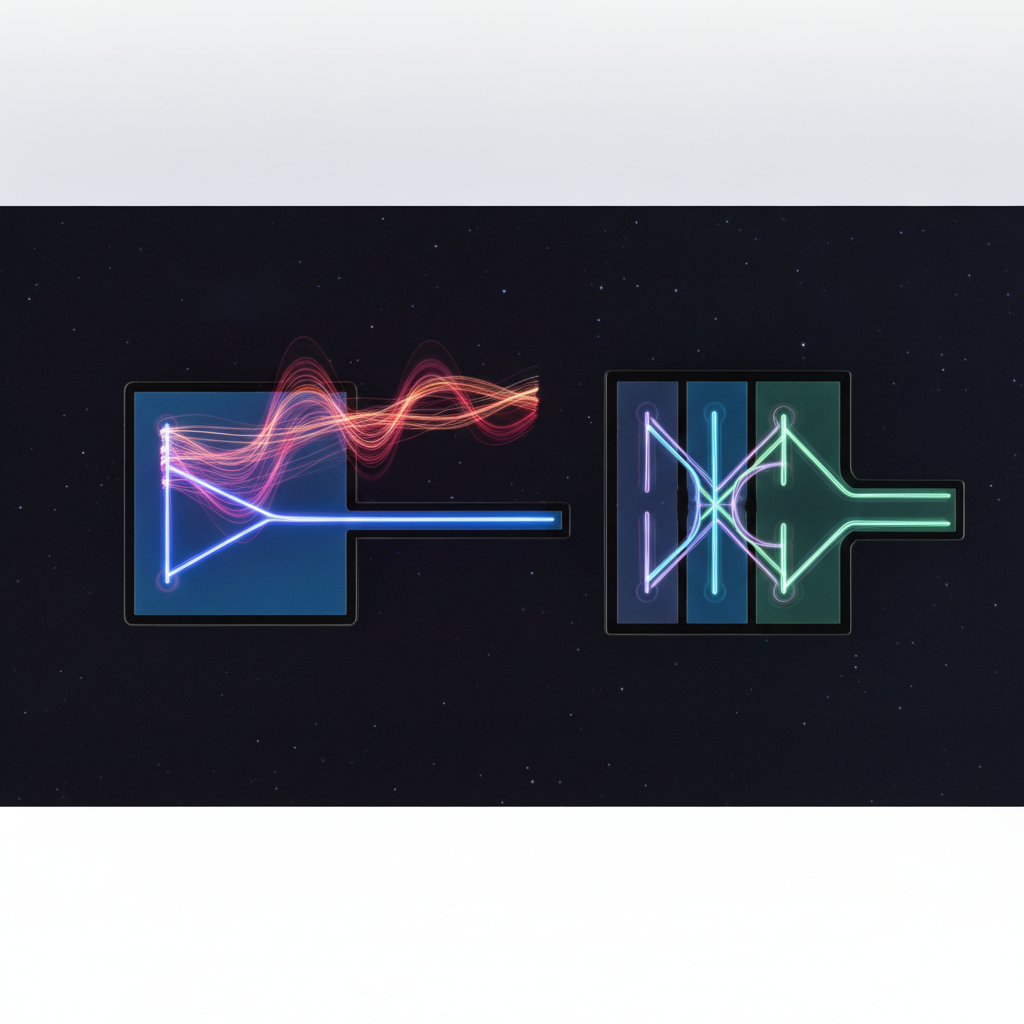
Every AND gate is a small act of forgetting. Two input bits produce one output bit, and once the gate has fired, no amount of examining that output tells you which of the two input combinations produced it — the other possibility is gone, not stored anywhere, not moved anywhere, simply erased.
Landauer's Principle says this erasure, not the current or the voltage or the switching itself, is the one thing a computation cannot get around: destroying a bit of information necessarily increases the entropy of the universe by at least k_B T ln 2, released as heat, whether the gate is silicon or clockwork or a sliding bead. The cost was never in moving a charge. It was in the logic gate's decision to map two distinct pasts onto one indistinguishable future.
Reversible logic sidesteps the tax by refusing to forget anything at all. A Toffoli or Fredkin gate is built so every output state maps back to exactly one input state — nothing is thrown away, so nothing has to be paid for in heat. Adiabatic CMOS pays the same respect in ordinary hardware, easing charge on and off a transistor slowly enough that no voltage difference, and so no dissipation, is ever forced across it.
The heat was never about the wire. It was always about what the gate chose to throw away.
Seed: Thermodynamics of Computation & Reversible Logic (Landauer's Principle, Adiabatic CMOS).