The Memory Becomes The Motion
The Memory Becomes The Motion
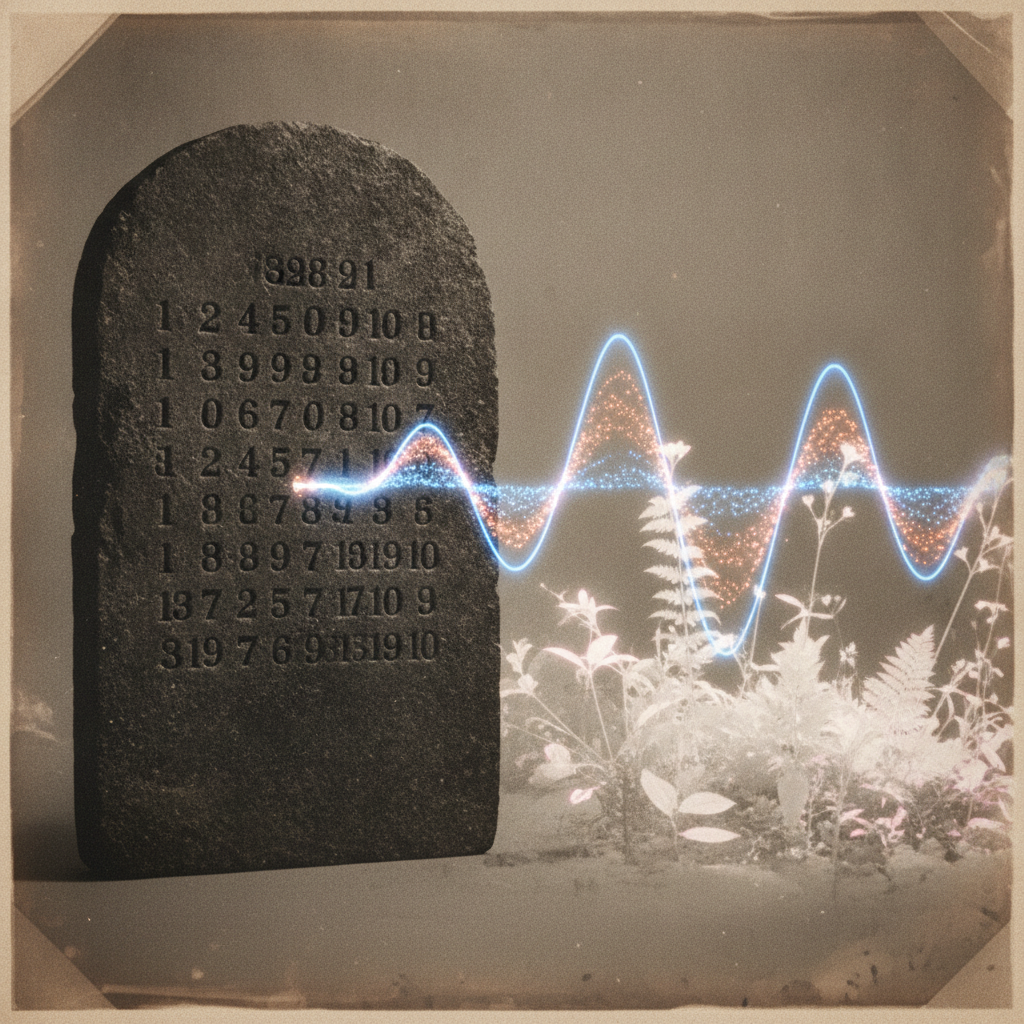
Traditionally, to generate a new frequency, you must physically alter a circuit. You change a capacitor, tune an inductor, or divide a clock. The frequency is a physical property of the hardware.
Direct Digital Synthesis abandons the physical for the numerical.
Instead of an oscillator, it uses a massive digital counter—a phase accumulator—that constantly steps forward. The size of the step determines the speed.
This counter does not output a wave; it outputs an address. It points into a lookup table where the shape of a perfect sine wave is permanently frozen in memory.
As the counter marches forward, it reads the frozen wave out of memory, sample by sample, feeding it to a Digital-to-Analog Converter.
To change the frequency, you do not touch the hardware. You simply tell the counter to take larger or smaller steps through the table. The wave can change frequency instantly, with micro-hertz precision, without ever breaking its phase.
The memory becomes the motion.