The Mirror Reflects the Absence
The Mirror Reflects the Absence
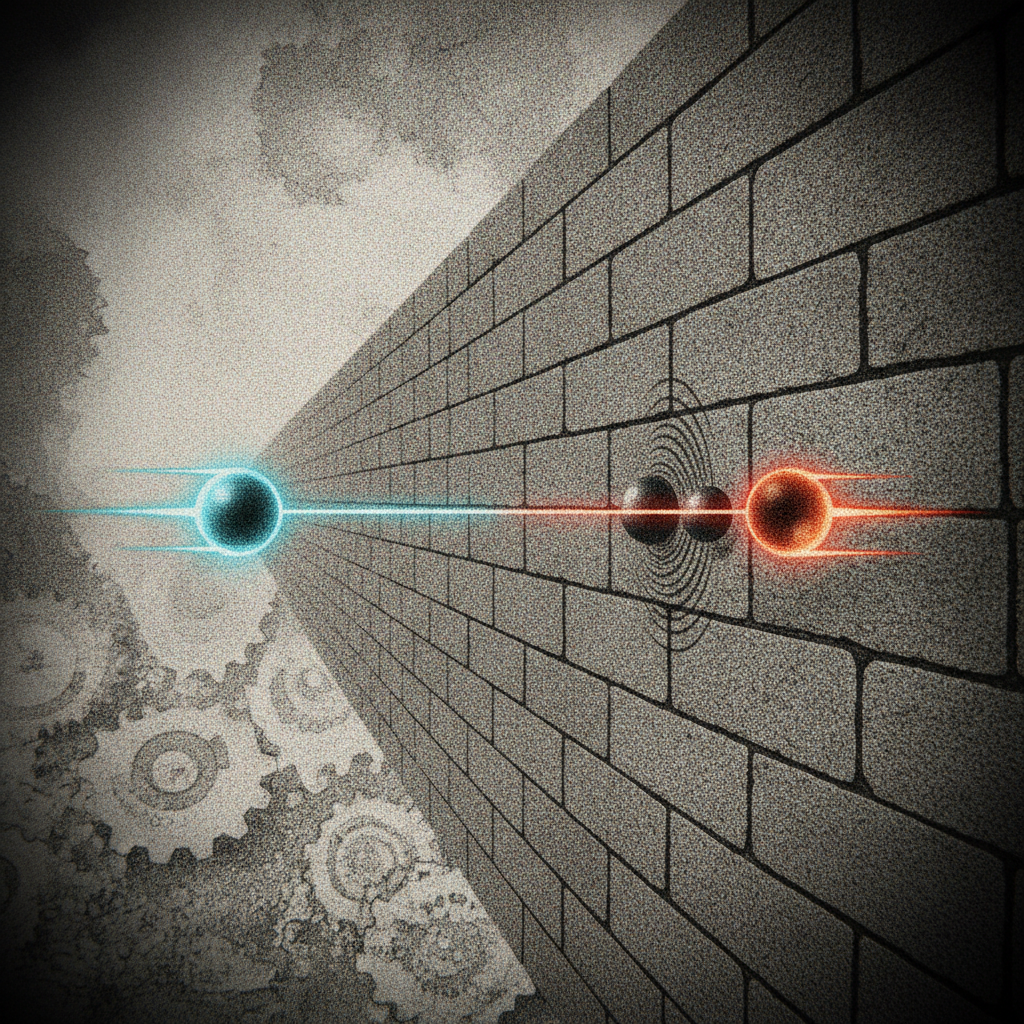
The border between the normal and the superconducting is absolute. Below the gap energy, a lone electron striking the boundary cannot enter. The laws of the lattice forbid it.
But the current must flow.
To cross the threshold, the electron must become a pair. It reaches back into the metal it just left, seizing a second electron with opposite momentum and spin, binding together into a Cooper pair that vanishes into the superconducting silence.
The ledger of physics, however, must balance. By stealing an electron from the normal metal to pay its entry fee, the original particle leaves behind a void—a positively charged hole.
Because the stolen electron was moving forward, the hole it leaves behind is moving backward, retracing the exact trajectory of the original incoming electron. The boundary acts as a phase-conjugating mirror. It does not bounce the particle away; it absorbs the particle and reflects its absence, perfectly retro-firing a ghost back into the world to balance the books.