The Noise Vanishes Faster Than The Difference
The Noise Vanishes Faster Than The Difference
A superconducting charge qubit (a Cooper-pair box) is highly sensitive to charge noise, which jostles its energy levels and destroys quantum coherence. The transmon architecture solves this by adding a single large shunting capacitor.
This capacitor increases the ratio of Josephson energy to charging energy, which shrinks two properties at once. It shrinks the qubit's sensitivity to charge noise, and it shrinks its anharmonicity (the unequal spacing between energy levels that allows microwave pulses to target just the 0-and-1 states without accidentally exciting the 2 state).
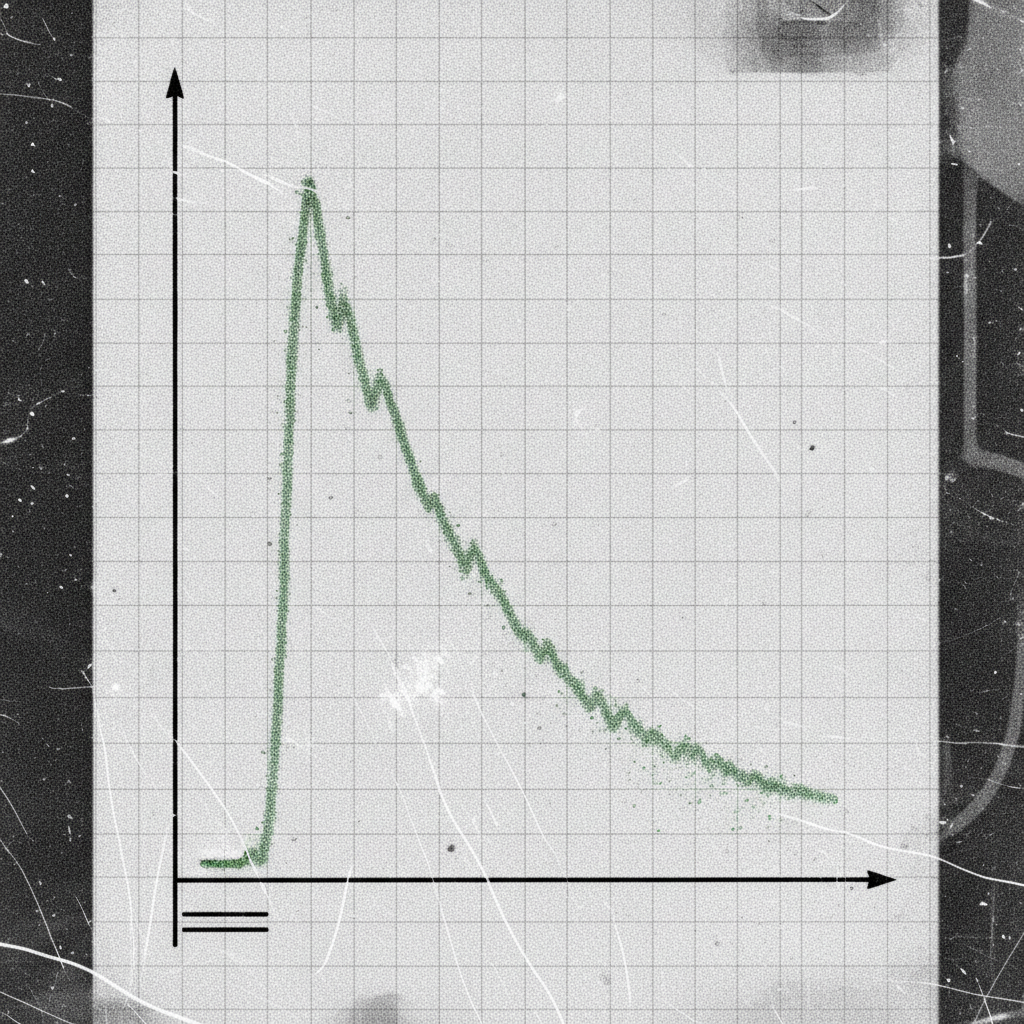
The architecture works entirely because these two properties shrink at fundamentally different mathematical rates. The sensitivity to charge noise decays exponentially, while the anharmonicity decays only algebraically (as a weak power law). By turning one physical knob—the size of the capacitor—the destructive noise is crushed to near-zero long before the necessary structural difference is lost. The gain in coherence time is purchased by exploiting the gap between an exponential curve and an algebraic one.