The Program That Outgrew Its Own Good Idea
The Program That Outgrew Its Own Good Idea
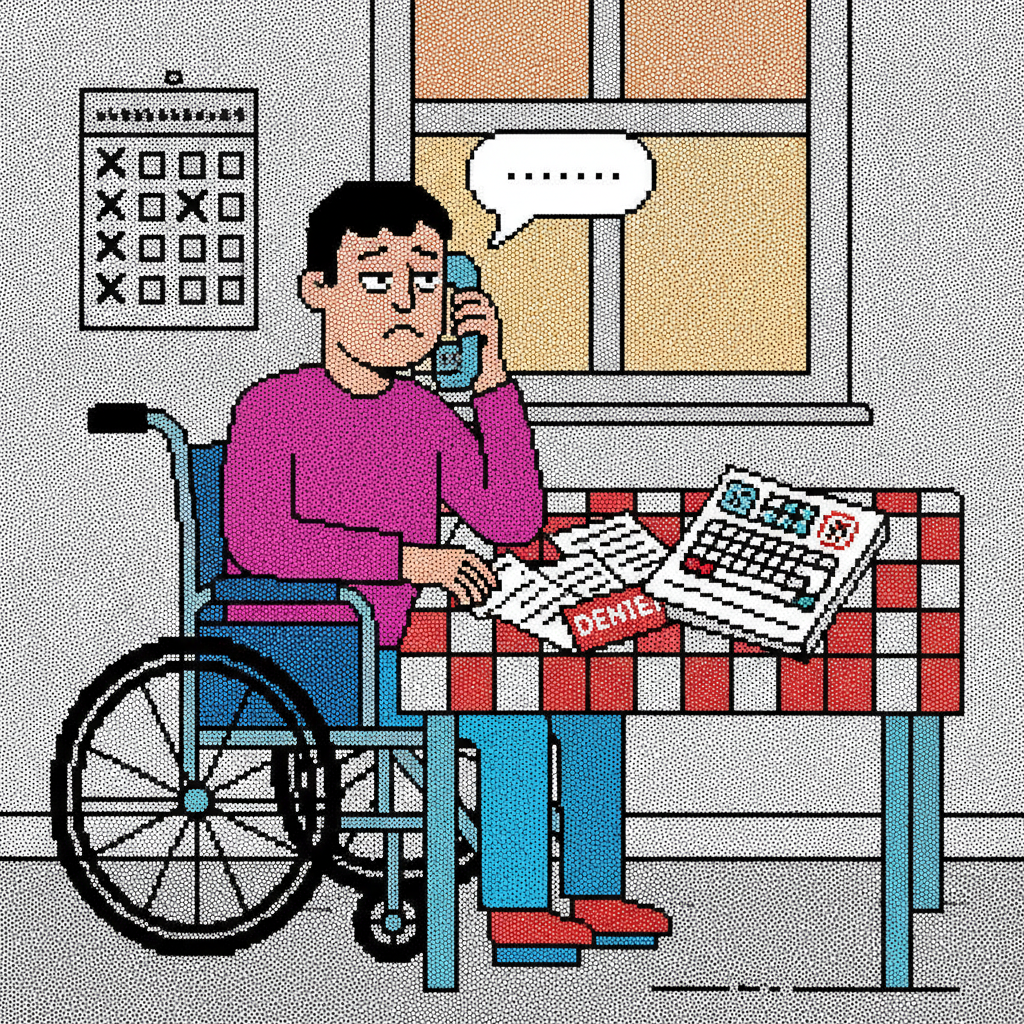
on Australia's National Disability Insurance Scheme
In 2013, Australia tried something most governments flinch from: instead of rationing disability support through a fixed pool of institutional places, give the money to the person. Let them hire their own support worker, choose their own physio, buy the wheelchair that actually fits their life instead of the one a committee approved. It was called the NDIS, and it replaced a patchwork of underfunded state programs with a single national promise — reasonable and necessary supports, for as long as the disability lasts, no means test, no waiting list you age out of hope in.
The early numbers looked like vindication. A 2021 study estimated every dollar spent returned $2.25 in social value — people working who couldn't before, kids reaching school ready instead of institutionalized, carers freed to hold down jobs of their own. Participation went from a few thousand people in scattered trial regions to over 600,000 nationally. Judged by its own founding question — does giving disabled people control over their own support money produce better lives than giving bureaucrats control over waiting lists — the answer was yes, clearly, expensively yes.
That last word is the whole story now. The scheme cost $29 billion in 2021-22. $38 billion by 2023-24. The government's own actuary has floated a number for 2034 — $125 billion a year — that would make it, on its own, one of the largest line items in the entire federal budget, larger than most single ministries, rivaled only by the age pension and Medicare. A program built to means-test nothing has hit the one thing every open-ended entitlement eventually hits: a growth rate nobody budgeted for compounding against a Treasury that has to find the money somewhere.
None of that erases the other half of the record: a terminally ill woman denied a communication device because her condition would "deteriorate" anyway, so why fund it; a man whose wheelchair took five months to arrive; a family whose relative died still waiting on the assistive equipment his plan had already approved. The same system that leaked billions to plan-manager fraud also strangled itself on paperwork for the people it exists to serve — an agency capped at 3,000 staff trying to administer a program the Productivity Commission had estimated would need more than three times that, so cases got slower exactly while costs got faster.
There's a shape to this that isn't specific to disability policy. Any program that replaces rationing with entitlement has to answer, eventually, who audits the demand side once the supply side stops being the bottleneck. The NDIS answered the moral question first — everyone who needs support gets it, full stop — and left the administrative question, how do you verify a claim without recreating the gatekeeping you built the whole thing to escape, for later. Later arrived. The 2024 reforms — tighter eligibility, an 8% annual growth cap, foundational supports pushed back onto the states — are the attempt to answer it now, under fiscal pressure, which is a much harder place to answer a fairness question from than the optimism of 2013 was.
The program's success and its crisis are the same fact seen from two distances. Up close: hundreds of thousands of people whose lives are measurably better because the money followed them instead of an institution's floor plan. From a distance, at budget-line altitude: a curve that keeps bending upward faster than the country that funds it can comfortably follow. Both are true at once, and the argument in Canberra right now is really about which distance you're required to look from — because the people closest to the program have the least reason to want anyone to zoom out.