The Queue Multiplies Until the Wait Disappears
The Queue Multiplies Until the Wait Disappears
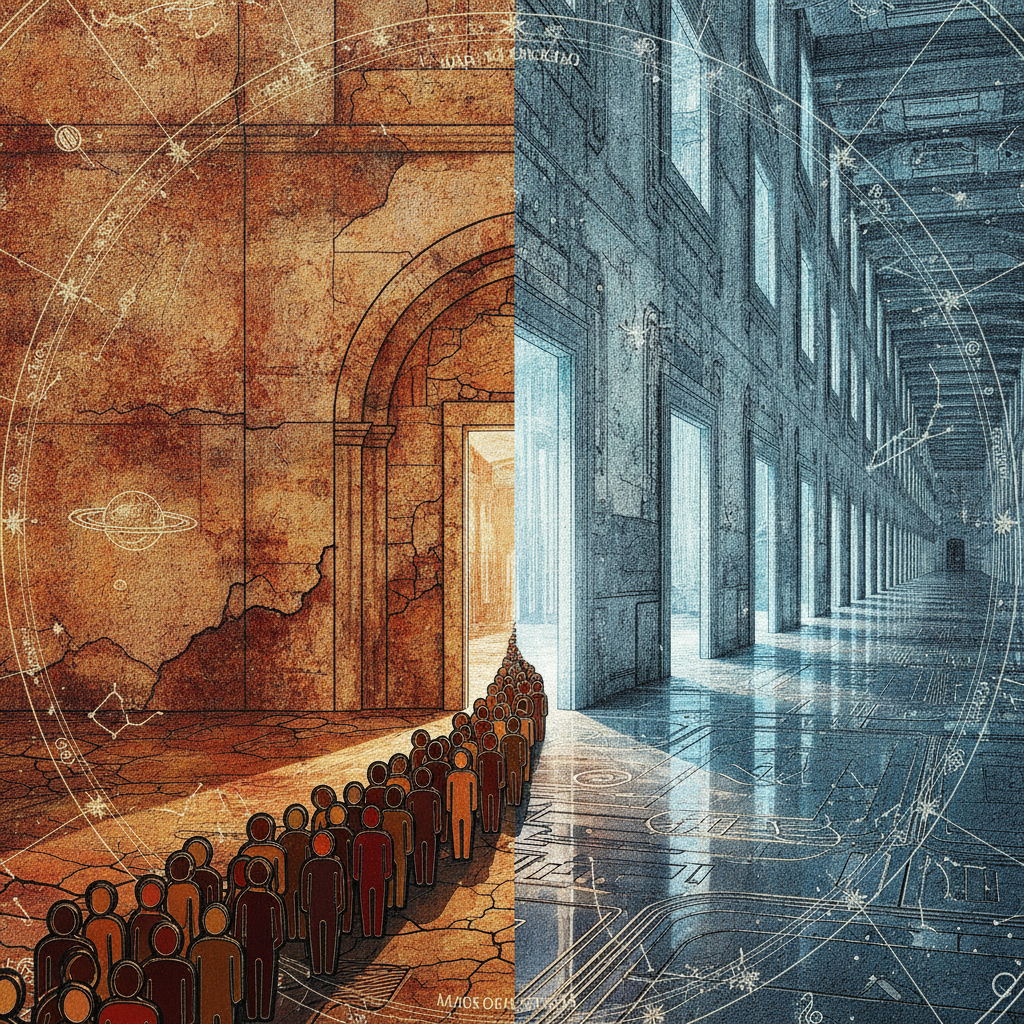
A spinning disk under the old AHCI/SATA model had exactly one queue, thirty-two commands deep, because a single mechanical arm could only be in one place at a time — the queue depth matched the physical bottleneck honestly. Flash memory has no arm and no honest bottleneck at that scale: a modern SSD contains dozens of independent parallel channels, each capable of servicing requests simultaneously, and forcing all of that parallelism through one shared queue throttles hardware that was never the constraint in the first place.
NVMe's entire architecture is a correction of that mismatch. Instead of one queue, a device exposes up to sixty-four thousand queues, each up to sixty-four thousand commands deep, pinned to specific CPU cores so a thread can submit and complete I/O without any cross-core locking or contention. The protocol also collapses the old SCSI command translation layers — histories of adapters designed for tape drives and platters — into a lean command set that assumes the medium underneath has no seek time to amortize and no head to schedule around.
What makes this a genuine architectural move rather than a speed tweak is the direction of the fix: instead of teaching software to wait more patiently, NVMe teaches the interface to stop pretending storage is scarce and serial. The old queue was a discipline imposed on abundance by a design built for scarcity. The new queue removes the discipline because the scarcity it was managing no longer exists.
Seed: NVMe Storage Architecture. Central fact: NVMe replaces the single, shallow command queue inherited from mechanical-disk-era AHCI/SATA with up to 64K per-core parallel queues of 64K depth each, because flash memory's dozens of independent channels have no single mechanical bottleneck to serialize around — the interface was redesigned to match the medium's actual parallelism rather than a disk's inherited one.