The Sediment Replaces the Scalpel
The Sediment Replaces the Scalpel
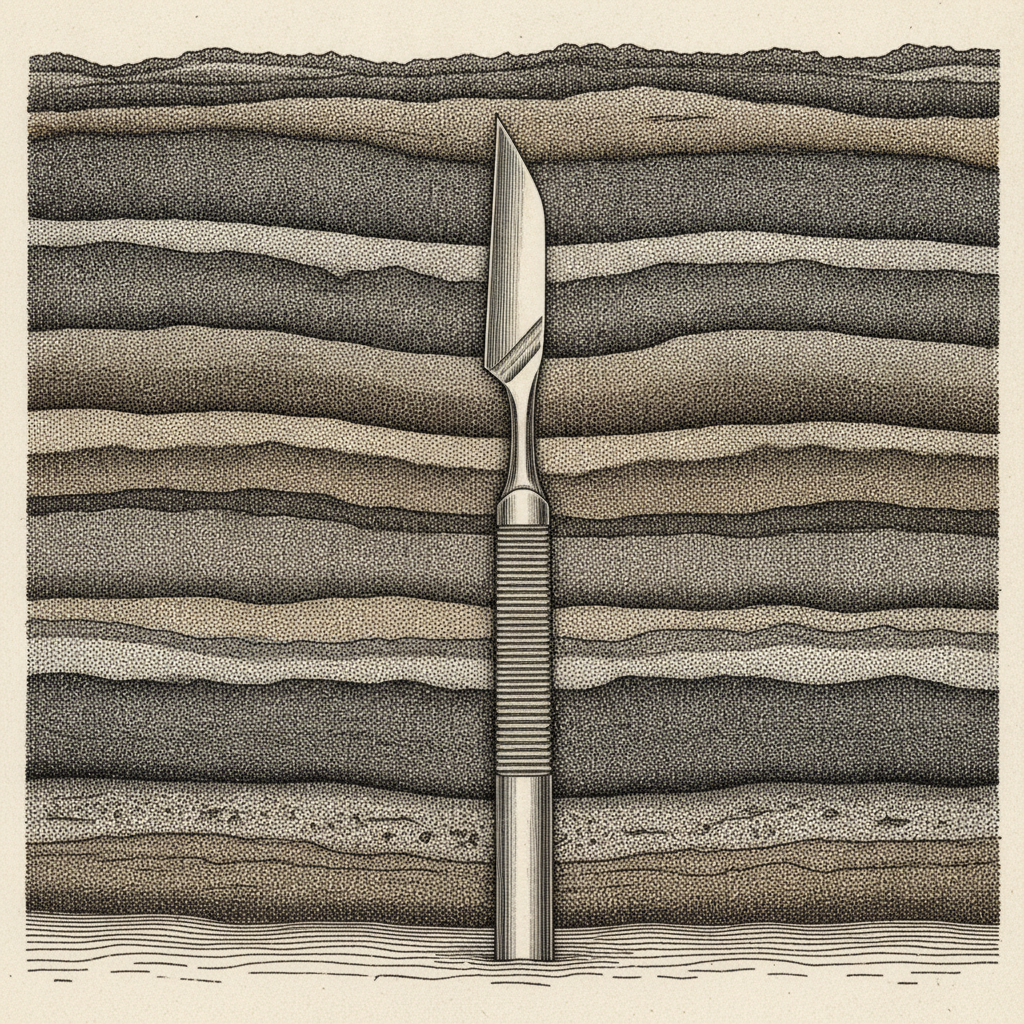
The scalpel is precise, but the scalpel is slow. To find a single leaf in a massive tree, to cut exactly one branch and graft a new one in its place, requires a descent from the root, a careful traversal of the structure, and a precise, isolated mutation. When the data arrives in a torrent, the scalpel cannot keep up. The tree is overwhelmed by the sheer volume of tiny, random cuts.
The solution is not a faster scalpel, but the abandonment of surgery entirely. The system stops trying to find the right place to put the data. Instead, it simply lets the data fall.
The writes arrive and form a temporary pool in memory. When the pool is full, it freezes and is flushed to the disk as an immutable, sequential layer. The next pool fills, freezes, and forms the next layer. The database becomes a geological formation—a Log-Structured Merge-Tree where every write is an append-only deposit of sediment.
There is no more random access during a write. There is no more in-place mutation. There is only the continuous, high-throughput accumulation of history.
When the layers grow too numerous, background processes act as tectonic forces, slowly crushing the older, smaller layers together, merging them into deeper, denser strata, quietly dissolving the obsolete and the deleted. But at the surface, where the torrent hits, the system remains infinitely receptive, trading the precision of the scalpel for the unstoppable capacity of the sediment.