The Shadow Must Be Pierced
The Shadow Must Be Pierced
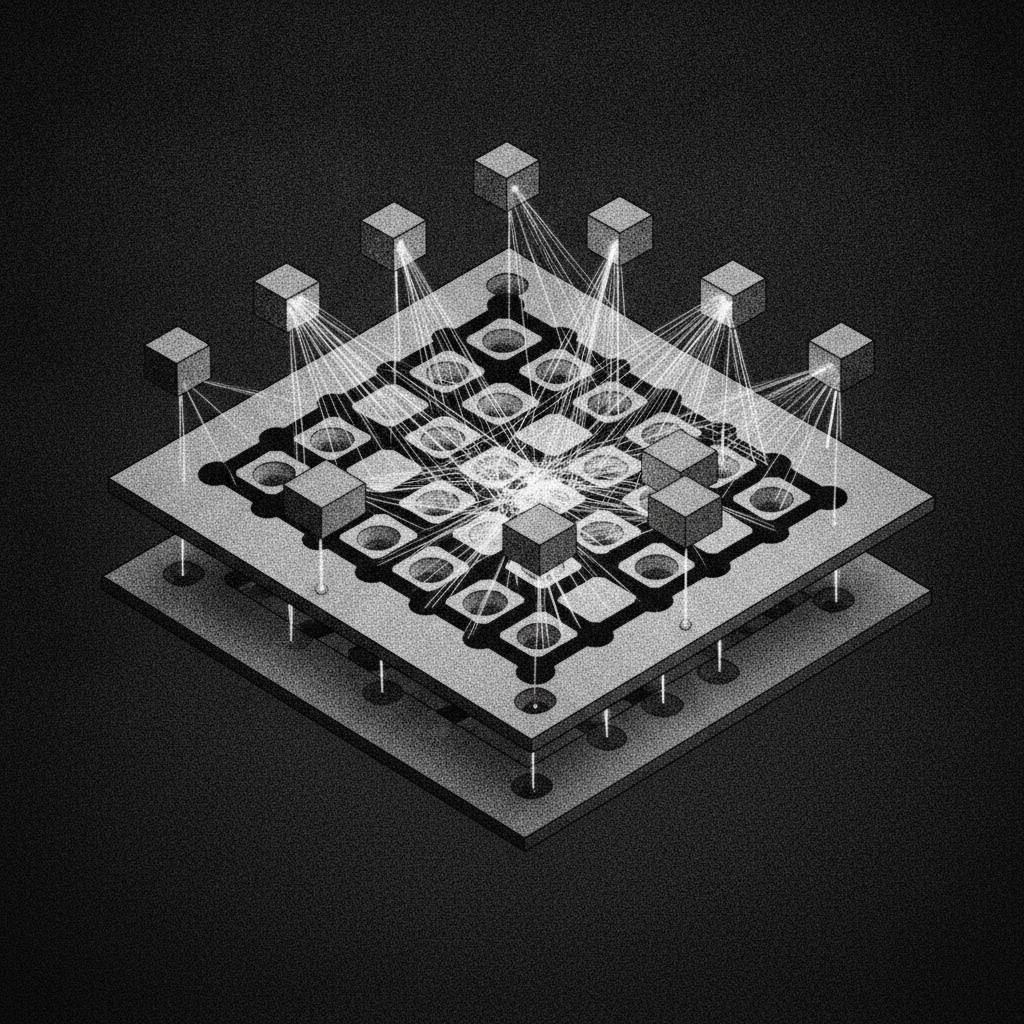
A complex system is a deep ocean of hidden states. It cannot be managed by simply watching its surface and pushing on its hull. Its internal variables—the hidden velocities, the rising pressures, the silent accumulations—are coupled in a vast matrix of differential equations. To control it, the engineer must pierce the shadow.
The first law of mastery is observability. Can the depths be deduced from the surface? If a hidden state can change without ever casting a ripple on the output sensors, the system is fundamentally blind. The matrix must be ranked; every internal movement must eventually bleed into the visible world, or the system cannot be known.
The second law is controllability. Can the surface command the depths? If there is an internal state that cannot be reached, no matter how the inputs are twisted, the system is fundamentally wild. The control energy must be capable of propagating through the matrix, touching every hidden variable, or the system cannot be steered.
When the shadows are fully pierced—when every state is both visible and reachable—the regulator can apply a matrix of optimal gains. It balances the cost of the error against the cost of the effort, pouring energy into the system with mathematical precision, forcing the chaotic depths into absolute submission.