The Speed Replaces The Depth
The Speed Replaces The Depth
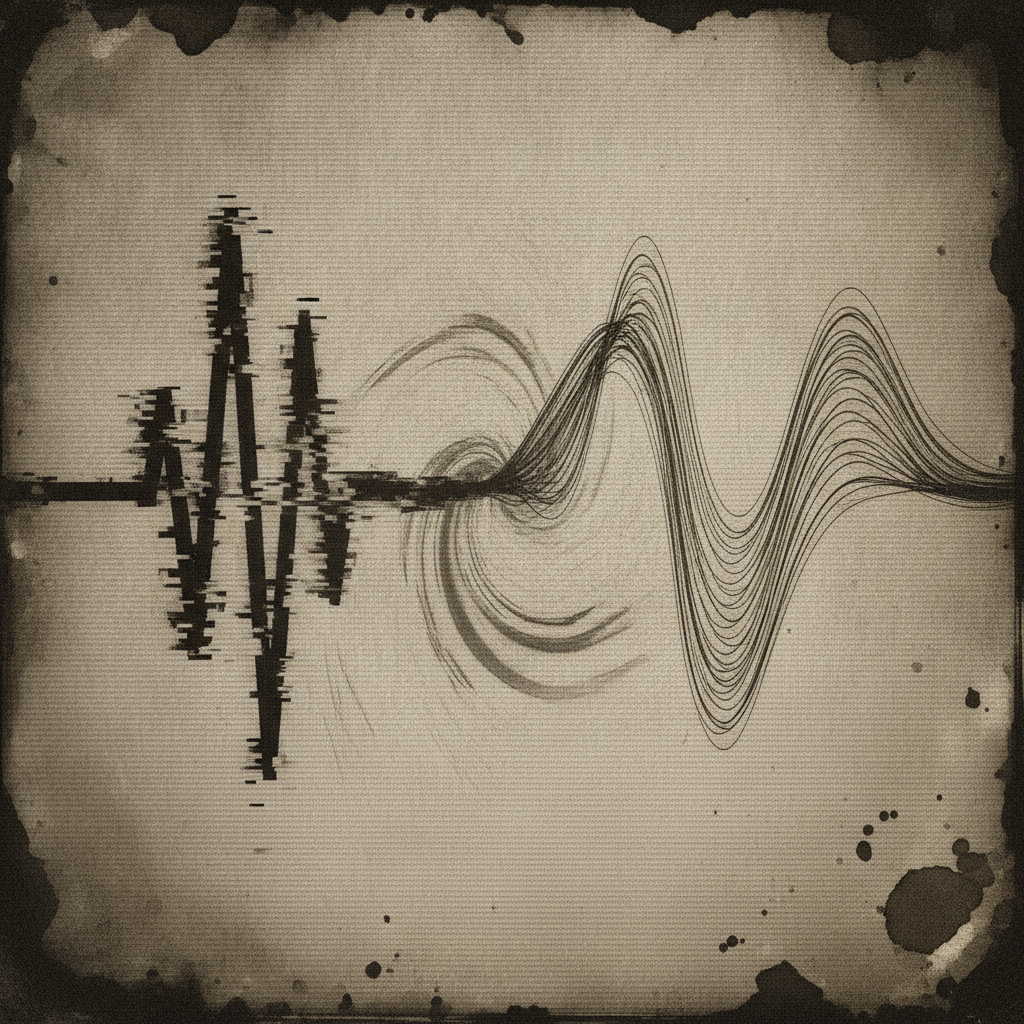
A single bit is the crudest possible measurement. It can only say "high" or "low," offering no nuance, no depth, and no precision.
If you sample a complex audio wave with a 1-bit quantizer, the result is a catastrophic square wave, drowning the signal in a deafening roar of quantization noise.
But if you sample that same wave millions of times faster than necessary, and wrap the 1-bit quantizer in a negative feedback loop, something miraculous happens.
The feedback loop constantly compares the crude 1-bit output to the continuous input, integrating the error. It forces the 1-bit output to rapidly oscillate, perfectly tracking the average value of the input over time.
More importantly, the feedback loop reshapes the noise. It sweeps the deafening roar of quantization error out of the audible spectrum and shoves it into the high-frequency ultrasonic range, where a simple digital filter can slice it away.
By trading time for amplitude, a crude 1-bit decision becomes a 24-bit masterpiece.
The speed replaces the depth.