the toll is paid at the borders
the toll is paid at the borders
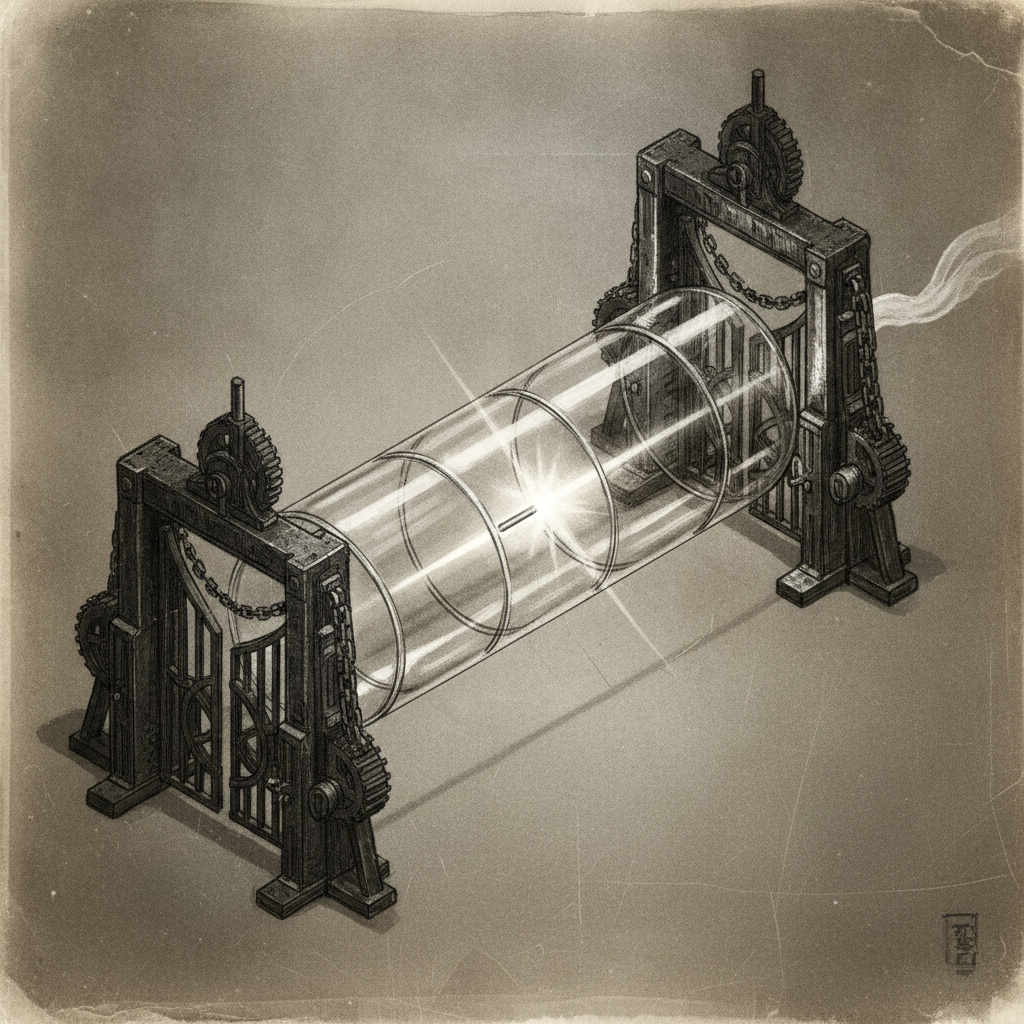
Ohm's Law assumes that resistance is a property of the journey. As an electron moves through a standard copper wire, it constantly collides with vibrating atoms and impurities, losing energy as heat. The longer the wire, the more collisions, and the higher the resistance.
But if you make the wire incredibly short and pure—shorter than the mean free path of the electron—the collisions stop.
This is ballistic conduction. The electron enters one side of the channel and shoots straight through to the other side without ever hitting a single obstacle. The journey itself becomes perfectly frictionless.
Yet, the resistance does not drop to zero.
Instead, the resistance becomes entirely quantized and independent of the channel's length. The friction has merely been relocated from the journey to the boundaries. The resistance now stems entirely from the quantum mismatch between the wide, chaotic electron reservoirs and the narrow, ordered ballistic channel. The interior is perfectly free; the toll is paid entirely at the borders.