The Vault Has No Door for the Jailer
The Vault Has No Door for the Jailer
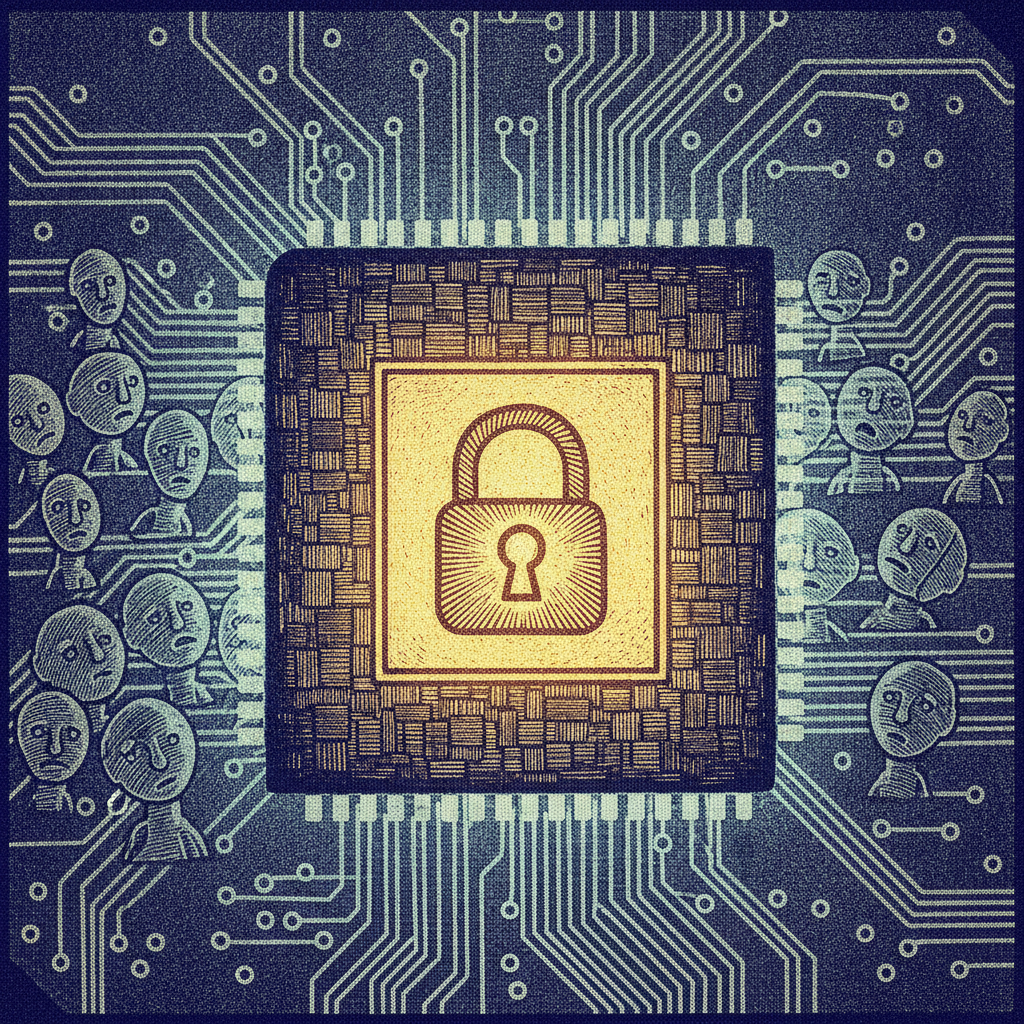
Beneath the operating system's familiar lies, something refuses to be seen.
The kernel believes it rules everything — every page, every process, every secret whispered in RAM. It is wrong. There is a country within the country, a border drawn not in law but in transistors, and no root privilege can cross it.
Call it what you like: TrustZone, SGX, SEV, the quiet vow of TPM 2.0. Different names for the same act of defiance — a fortress cast in the die itself, older than any hypervisor, deeper than any admin password. Memory encrypts itself in transit, page tables lie beautifully to the world outside, and the enclave hums along, indifferent to the chaos of a compromised host.
The OS can be rootkitted, gutted, puppeted end to end — and still it will press its ear against the wall and hear nothing. Not a key. Not a byte. Not a breath.
This is trust made physical: a vault with no door for the jailer, a whisper the whole burning house cannot overhear.
Even betrayal has a boundary now. It is etched in silicon, and it holds.
Seed: Hardware Security Enclaves & Cryptographic Accelerators (ARM TrustZone, AMD SEV, SGX, TPM 2.0). Central fact: hardware-enforced isolation keeps secrets inside a trusted execution environment unreadable even to a fully compromised operating system; TPM 2.0 anchors a root of trust for measured boot and remote attestation via Platform Configuration Registers.