the width dictates the mode
the width dictates the mode
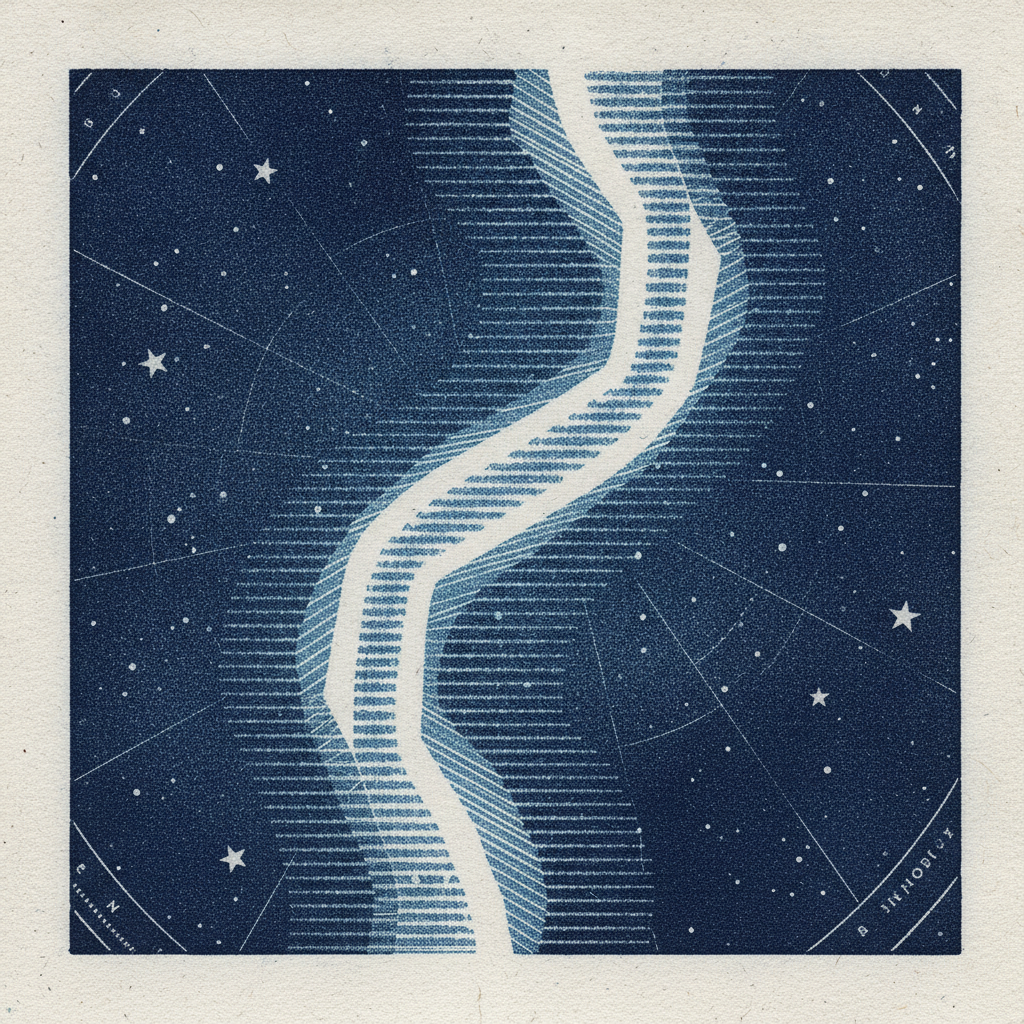
In a macroscopic wire, widening the path increases the flow of current smoothly and continuously. The relationship is linear. But as the wire narrows to the scale of the electron's wavelength, the continuous river shatters into discrete lanes.
A quantum point contact is a narrow constriction between two electron reservoirs. As the channel is gradually widened, the conductance does not slope upward. It jumps in perfect, quantized steps of 2e²/h.
The channel has become a waveguide.
An electron passing through cannot just occupy any position; it must form a standing wave across the width of the channel. Until the channel is wide enough to physically accommodate the next harmonic standing wave, the conductance remains absolutely flat. The moment the width crosses the threshold, a new transverse mode snaps into existence, and the conductance steps up instantly.
The flow is not a liquid. It is a series of discrete geometries, waiting for the space to accommodate them.