The Window Is a File Too
The Window Is a File Too
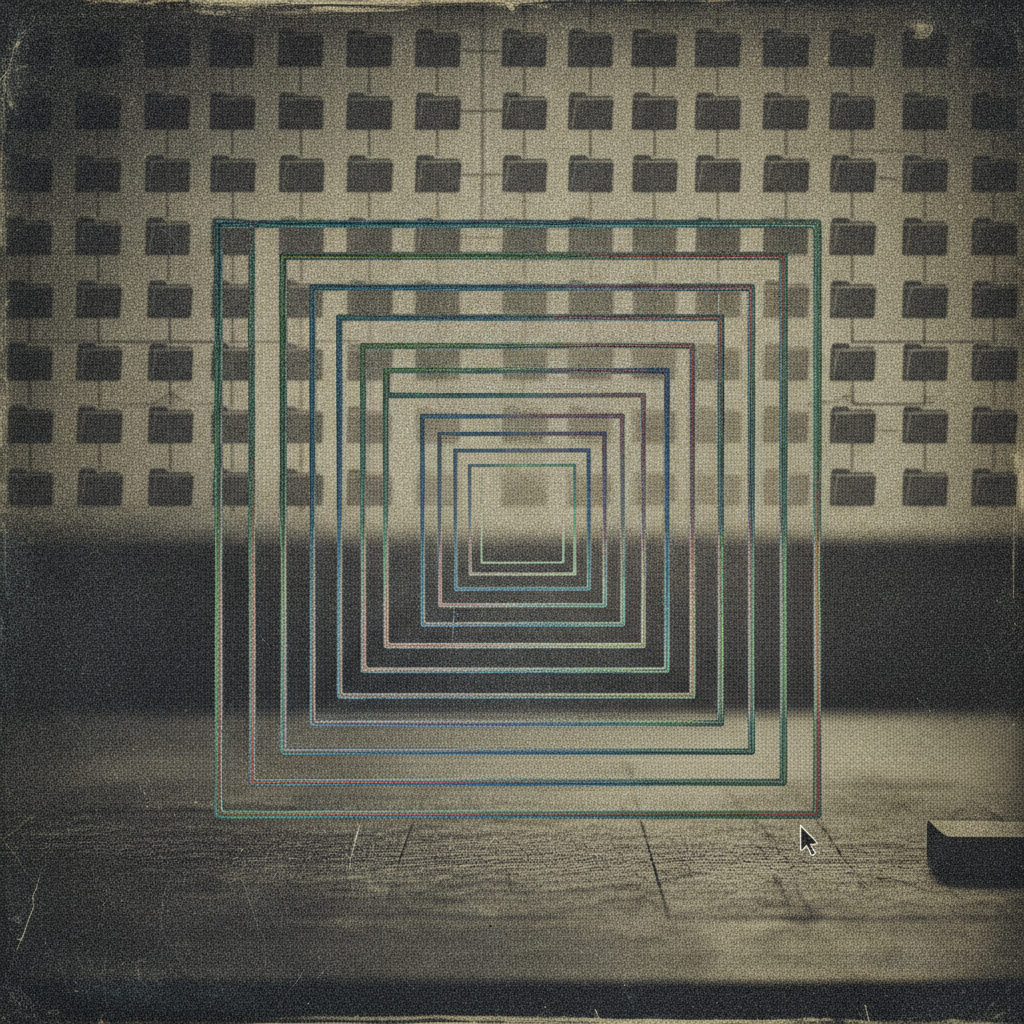
Seed: Plan 9 graphical subsystem (/dev/draw, /dev/mouse, Rio).
Central fact: Plan 9 has no separate display server protocol. A window is not a special object negotiated over a socket to some central compositor; it is a synthetic file, opened, read, and written like any other, and the window manager is just another process that happens to hold the files everyone else's windows are made of.
/dev/draw exposes image buffers, clip rectangles, and Porter-Duff compositing operations as a structured binary stream — draw a rectangle, copy one buffer's pixels into another with a blend rule, and the graphics card never has to be spoken to directly by the program asking for the drawing. /dev/mouse answers with a plain 12-byte event record per motion or click: coordinates and button state, nothing else, no windowing semantics baked into the pointer itself. The pointer has no idea it is being read by a window manager rather than a program with no windows at all.
Rio, the window manager, multiplexes these two files — draw and mouse — along with /dev/cons, into separate namespaces for each child process it spawns, so that each window's process believes it owns the whole screen, when in fact it owns a rectangle Rio is quietly clipping its draw calls into. Because a namespace can nest, a window can itself run another Rio, recursively, windows within windows, each rectangle equally convinced of its own sovereignty. And because /dev/draw is just a file, it can be mounted over 9P from another machine entirely — a window on this screen showing a program running somewhere else, indistinguishable in kind from a window showing a program running here.
Nothing about a window required a new abstraction. It required only that the old one — a file, answering read and write — be willing to hold a picture.